UML-Diagramm-Symbole
Das gesamte Formenvokabular auf einer Seite: welches Symbol zu welchem der vierzehn Diagramme gehört, was jede Pfeilspitze bedeutet und wie Sie ein Diagramm an seinen Symbolen erkennen, bevor Sie ein Wort gelesen haben.
8 Min. LesezeitUML 2.5.12 von 35
Die kurze Antwort
- Lesen Sie die Formen vor den Linien. Strichmännchen und Ellipsen heissen Anwendungsfall, Lebenslinien heissen Sequenz, 3D-Kästen heissen Verteilung.
- Die Linien sind in allen vierzehn Diagrammen gleich, die Kästen nicht. Vier Pfeilspitzen einmal gelernt zahlen sich überall aus.
- Der Strich schwächt immer die Aussage der durchgezogenen Variante ab: Abhängigkeit statt Assoziation, Realisierung statt Vererbung.
- Ein Rechteck mit Eselsohr ist eine Notiz und trägt keine Semantik. Text in geschweiften Klammern darin ist eine Bedingung, die gelten muss.
01Die Formen, und worauf jede Sie festlegt#
UML hat weniger Symbole, als sein Ruf vermuten lässt. Zieht man die ab, die nur auf einer einzigen Diagrammart vorkommen, tragen etwa ein Dutzend Formen die ganze Sprache. Jede ist eine Aussage darüber, welche Art Ding im Kasten steckt, und die falsche zu wählen ist keine kosmetische Panne, sondern eine Behauptung - eine Ellipse dort, wo ein abgerundetes Rechteck hingehört, sagt „Ziel, das der Nutzer hat“, wo Sie „Schritt, den das System ausführt“ meinten.
| Element | Notation | Was es bedeutet |
|---|---|---|
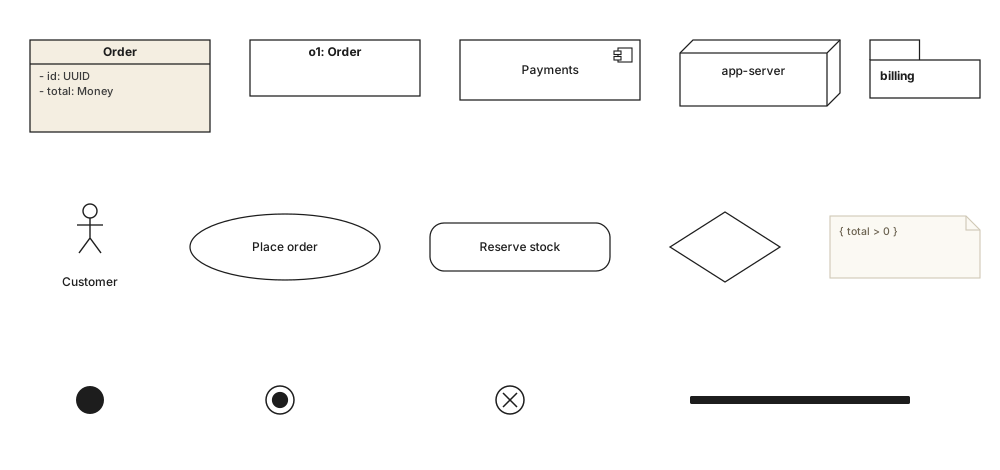
| Rechteck | ▭ | Ein Klassifizierer: eine Klasse, ein Artefakt, ein Beteiligter. Die Standardform, auf der jedes andere Strukturdiagramm aufbaut. |
| Rechteck, Name unterstrichen | o1: Order | Eine Instanz statt eines Typs - eine bestimmte Bestellung, auf einem Objektdiagramm. Die Unterstreichung ist der ganze Unterschied. |
| Rechteck mit Komponenten-Icon | ▭ ⊟ | Eine austauschbare Einheit mit Schnittstellen, auf einem Komponentendiagramm. Das Icon sitzt oben rechts und ist das Einzige, was sie von einer Klasse unterscheidet. |
| 3D-Kasten | ▱ | Ein Knoten - Hardware, ein Container, eine Ausführungsumgebung - auf einem Verteilungsdiagramm. |
| Ordner mit Reiter | 🗀 | Ein Namensraum, auf einem Paketdiagramm. |
| Ellipse | ⬭ | Ein Anwendungsfall: etwas, das ein Akteur erreichen will, auf einem Anwendungsfalldiagramm. Nie ein Schritt, nie ein Bildschirm. |
| Strichmännchen | ☺ | Ein Akteur: eine Rolle ausserhalb der Systemgrenze. Es kann ein Mensch sein, ein anderes System oder eine Uhr - deshalb ist die Figur eine Rolle und kein Porträt. |
| Abgerundetes Rechteck | ▢ | Eine Aktion auf einem Aktivitätsdiagramm oder ein Zustand auf einem Zustandsdiagramm. Dieselbe Form, zwei Bedeutungen - die umgebende Notation entscheidet. |
| Raute | ◇ | Eine Entscheidung, wenn ein Zweig genommen wird, oder eine Zusammenführung, wenn mehrere wieder zusammenkommen. In beiden Fällen dasselbe Zeichen; welches es ist, verrät die Zahl der Pfeile. |
| Massiver Balken | ▬ | Eine Gabelung, wenn alles Nachgelagerte nebenläufig läuft, oder eine Vereinigung, wenn alles Vorgelagerte erst fertig werden muss. |
| Gefüllte Scheibe | ● | Der Startknoten oder initiale Pseudozustand: wo der Fluss beginnt. |
| Scheibe im Ring | ◉ | Aktivitätsende oder Endzustand: der ganze Fluss ist vorbei. |
| Durchkreuzter Kreis | ⊗ | Flussende. Es beendet dieses Token, nicht die Aktivität - die Unterscheidung, über die die meisten ersten Entwürfe stolpern. |
| Umgeknickte Ecke | 🗒 | Eine Notiz oder eine Randbedingung, mit einer gestrichelten Linie angehängt. Geschweifte Klammern darin machen daraus eine Bedingung, die gelten muss. |
Die Knotenformen und die Diagramme, denen sie gehören.
02Die sechs Linien, die jedes Diagramm teilt#
Die Beziehungslinien sind der Teil von UML, den zu lernen sich einmal lohnt, weil sie überall gleich gezeichnet werden. Ein hohles Dreieck bedeutet dasselbe zwischen zwei Klassen, zwei Komponenten, zwei Anwendungsfällen und zwei Knoten, also amortisiert sich die Investition über alle vierzehn Diagrammarten.
| Element | Notation | Was es bedeutet |
|---|---|---|
| Assoziation | Eine schlichte Linie. Die beiden Enden wissen voneinander, und Multiplizitäten an beiden Enden sagen, wie viele. | |
| Generalisierung | Durchgezogene Linie, hohles Dreieck am allgemeinen Ende. „Ist eine Art von“ - Vererbung, Spezialisierung, Untertyp. | |
| Realisierung | Gestrichelte Linie, hohles Dreieck. Die Quelle implementiert den Vertrag, den das Ziel deklariert. Schnittstellen, nicht Vererbung. | |
| Komposition | Gefüllte Raute am Ganzen. Das Teil gehört einem Ganzen und stirbt mit ihm. | |
| Aggregation | Hohle Raute am Ganzen. Eine Ganzes/Teil-Lesart ohne Eigentumsanspruch und ohne formale Semantik in UML 2.5.1. | |
| Abhängigkeit | Gestrichelt, offener Pfeil. Die Quelle nutzt das Ziel - ein Parameter, ein Rückgabetyp, ein statischer Aufruf - ohne es zu halten. |
Zwei Regeln machen das aus dem Kopf statt aus der Tabelle abrufbar. Erstens: es zählt das verzierte Ende - das Dreieck zeigt auf das Allgemeinere, die Raute sitzt am besitzenden Ganzen, der offene Pfeil zeigt auf das Genutzte. Zweitens: ein Strich schwächt die durchgezogene Aussage - ein durchgezogenes Dreieck ist Vererbung, ein gestricheltes nur ein Vertrag; eine durchgezogene Linie ist eine strukturelle Verbindung, eine gestrichelte blosse Nutzung.
03Die Linien, nebeneinander gezeichnet#
Pfeilspitzen lassen sich in Fliesstext schwer und nebeneinander leicht unterscheiden. Unten sind die vier meistverwechselten Linien zwischen derselben Art Kästen im selben Massstab gezeichnet, sodass der Unterschied die Spitze ist und sonst nichts.

Von links nach rechts: Customer und Order sind schlicht assoziiert, eins zu vielen. CardPayment generalisiert Payment - das hohle Dreieck zeigt nach oben auf den allgemeineren Klassifizierer. Invoice realisiert die Schnittstelle Printable, und der Strich ist der ganze Unterschied zur Linie daneben. Basket hängt von PriceService ab, nutzt ihn also, ohne ihn zu besitzen.
04Zeichen, die nur auf einem Diagramm vorkommen#
Eine Handvoll Zeichen gehört genau einer Diagrammart. Sie zu erkennen lohnt sich gerade deshalb, weil sie das Diagramm identifizieren: eines zu sehen sagt Ihnen, was Sie lesen.
| Element | Notation | Was es bedeutet |
|---|---|---|
| Lebenslinie | ▭ + ┆ | Ein Kasten mit einer gestrichelten Senkrechten darunter - nur Sequenzdiagramme. Das schmale Rechteck auf der Linie ist ein Ausführungsvorkommen. |
| Kombiniertes Fragment | alt / loop / opt | Ein Kasten mit einem fünfeckigen Namensschild in der Ecke, der einen Teil eines Sequenzdiagramms umschliesst, um ihn bedingt oder wiederholt zu machen. |
| Include / extend | «include» | Ein gestrichelter offener Pfeil mit Schlüsselwort, auf einem Anwendungsfalldiagramm. Das Schlüsselwort ist tragend: die beiden zeigen in entgegengesetzte Richtungen. |
| Systemgrenze | ▭ herum | Das Rechteck hinter den Anwendungsfällen. Innen ist das System; die Akteure bleiben draussen. |
| Deploy | «deploy» | Ein gestrichelter Pfeil, der ein Artefakt auf einen Knoten legt. Nie umgekehrt. |
| Kugel und Pfanne | —○ ⊃— | Eine angebotene Schnittstelle (Lolli), die auf eine benötigte (Pfanne) trifft, auf einem Komponentendiagramm. Das Paar ist ein Konnektor. |
| Swimlane | │ │ │ | Eine Partition auf einem Aktivitätsdiagramm. In welcher Bahn eine Aktion sitzt, sagt, wer für sie zuständig ist. |
| Krähenfuss | —‹ | Gar kein UML. Ein dreizinkiges Ende heisst „viele“ in der ER-Notation - sehen Sie eines, lesen Sie ein Datenmodell und kein Klassendiagramm. |
05Verzierungen: Guillemets, geschweifte und eckige Klammern#
Drei Arten von Satzzeichen erscheinen auf UML-Diagrammen, und jede bedeutet etwas Bestimmtes. Man überliest sie leicht, und jede trägt mehr Information pro Zeichen als die Form, auf der sie sitzt.
| Element | Notation | Was es bedeutet |
|---|---|---|
| Guillemets | «interface» | Ein Stereotyp: eine Erweiterung des Standardvokabulars, von UML selbst oder von einem Profil definiert. Wo das Zeichen fehlt, schreibt man <<…>>. |
| Geschweifte Klammern | { ordered } | Eine Bedingung, die gelten muss - an einem Ende, an einem Attribut oder in einer Notiz. Häufig sind { ordered }, { unique } und { readOnly }. |
| Eckige Klammern | [approved] | Ein Wächter an einem Übergang oder einer Kante. Die Kante wird nur genommen, wenn die Bedingung gilt, und die Wächter aus einer Entscheidung sollten vollständig sein. |
| Sichtbarkeitszeichen | + - # ~ | Öffentlich, privat, geschützt und Paket, vor einem Elementnamen. |
| Multiplizität | 0..* 1 2..5 | Wie viele Instanzen beteiligt sind, an das Ende der Linie geschrieben, für das es gilt. Eine fehlende Multiplizität heisst unbestimmt, nicht eins. |
| Unterstreichung | static | Gehört dem Klassifizierer statt einer Instanz - oder, auf einem ganzen Kasten, dass der Kasten eine Instanz ist. |
06Was zu behalten ist#
In je einer Zeile
- 01Formen identifizieren das Diagramm; die Linien tragen die Bedeutung. Lesen Sie sie in dieser Reihenfolge.
- 02Am verzierten Ende einer Linie hängt alles: Dreieck am Allgemeinen, Raute am Ganzen, Pfeil am Genutzten.
- 03Ein Strich schwächt immer die durchgezogene Aussage - Realisierung statt Vererbung, Nutzung statt Struktur, Antwort statt Aufruf.
- 04Dasselbe abgerundete Rechteck ist eine Aktion im Aktivitätsdiagramm und ein Zustand im Zustandsdiagramm.
- 05Guillemets, geschweifte und eckige Klammern sind Notation, keine Anmerkung. Sie wegzulassen ändert, was das Diagramm sagt.
07Häufige Fragen#
Welche Grundsymbole werden in UML-Diagrammen verwendet?
Ein Rechteck ist ein Klassifizierer - Klasse, Komponente oder Artefakt. Eine Ellipse ist ein Anwendungsfall, ein Strichmännchen ein Akteur, ein abgerundetes Rechteck eine Aktion oder ein Zustand und eine Raute eine Entscheidung. Ein gefüllter Kreis startet einen Fluss, ein umringter beendet ihn. Die Bedeutung tragen die Linien: die Pfeilspitze sagt, welche Beziehung gemeint ist.
Woran erkenne ich, welches UML-Diagramm ich vor mir habe?
Lesen Sie die Formen vor den Linien. Strichmännchen und Ellipsen bedeuten Anwendungsfalldiagramm, abgerundete Kästen mit gefülltem Startkreis bedeuten Aktivität oder Zustandsautomat, senkrechte Lebenslinien mit waagerechten Pfeilen bedeuten Sequenz, und schlichte Rechtecke mit Rauten und Dreiecken bedeuten Klassen. 3D-Kästen bedeuten Verteilung.
Was bedeutet eine gestrichelte Linie in UML?
Der Strich schwächt immer die Aussage der durchgezogenen Variante ab. Gestrichelt mit offenem Pfeil ist eine Abhängigkeit - Nutzung ohne Besitz. Gestrichelt mit hohlem Dreieck ist Realisierung, nicht Vererbung. Gestrichelt zu einem Kasten mit Eselsohr hängt eine Notiz an, und im Sequenzdiagramm bedeutet sie eine Antwort statt eines Aufrufs.
Sind UML-Symbole in allen vierzehn Diagrammtypen gleich?
Die Linien ja, die Kästen nicht. Generalisierung, Assoziation, Abhängigkeit und Realisierung werden überall identisch gezeichnet, weshalb es sich lohnt, sie einmal zu lernen. Die Knotenformen sind je Diagramm spezifisch, und das ist Absicht - genau daran erkennt man ein Diagramm auf einen Blick.
Was bedeutet ein Rechteck mit umgeknickter Ecke in UML?
Es ist eine Notiz: ein Kommentar, eine Bedingung oder eine Erläuterung, mit einer gestrichelten Linie an das Beschriebene gehängt. Text in geschweiften Klammern ist eine Bedingung, die gelten muss, etwa { total > 0 }. Notizen tragen keine eigene Semantik und lassen sich an alles anhängen.
In dieser Reihe
- 01Was ist UML?
- 02UML-Symbole
- 03Diagramm auswählen
- 04Klassendiagramme
- 05Klassendiagramm-Beispiele
- 06Klassendiagramm zeichnen
- 07Klassendiagramm-Symbole
- 08Sequenzdiagramme
- 09Sequenzdiagramm-Beispiele
- 10Sequenzdiagramm zeichnen
- 11Anwendungsfalldiagramme
- 12Anwendungsfall-Beispiele
- 13Aktivitätsdiagramme
- 14Aktivitätsbeispiele
- 15Zustandsdiagramme
- 16Zustandsdiagramm-Beispiele
- 17Komponentendiagramme
- 18Komponenten-Beispiele
- 19Komponentendiagramm zeichnen
- 20Komponenten-Symbole
- 21Verteilungsdiagramme
- 22Verteilungsbeispiele
- 23Objektdiagramme
- 24Paketdiagramme
- 25Kompositionsstrukturdiagramme
- 26Kommunikationsdiagramme
- 27Sequenz vs Kommunikation
- 28Zeitverlaufsdiagramme
- 29Interaktionsübersichtsdiagramme
- 30Profildiagramme
- 31UML mit KI
- 32E-Commerce-Beispiel
- 33Banken-Beispiel
- 34Microservices-Beispiel
- 35AWS-Beispiel
Passend dazu
Grundlagen
Notationsreferenz
Notationsreferenz
Strukturdiagramme
Grundlagen
Strukturdiagramme